
![Boulder Cuba Sister City Organization [Home]](images/header.jpg)


2013
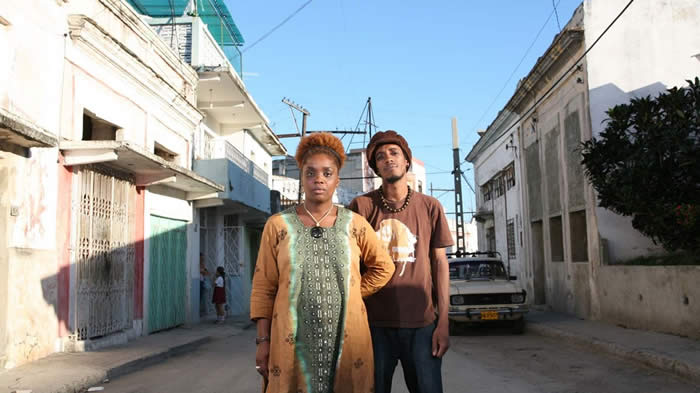
OBSESIÓN
Obsesión, Hip Hop from Havana, Cuba, with a social conscience. Formed by Magia López and Alexey Rodríguez, Obsesión is one of the most prominent hip hop groups in Cuba. In addition to performaing their music, they will give a short presentation on their community work (workshops on racism, music and dance lessons, community projects) in Havana.
Sunday, October 6th
5pm
D Note in Arvada
Sunday is salsa night at the D Note. You
may stay for lessons and dancing to a live band.
THE CHANGING ECONOMY IN CUBA
Monday, October 7th
7pm
3250 O'Neal Circle
Boulder
Collin Laverty, author of Cuba's New Resolve, Economic Reform and its Implications for U.S. policy, will provide information on the economy in Cuba, changes that occurred over the past few years, and what may happen moving forward. He writes on these and related issues with the Center for Democracy in the Americas and is president of Cuba Educational Tours.
"Polishing Diamonds in Havana"
Presentation by BOCUSCO member Judy Kreith.
Public meeting, Monday, August 26
Featuring the presentation “Polishing Diamonds in Havana” 7:00-8:15, followed by discussion of future Cuba travel, plans for a summer 2014 Boulder-Cuba Art and Dance Festival and other business.
The Island of Cuba evokes images of vibrant music and dance, world class cigars and white sandy beaches that beckon tourists from all over the world. A lesser known fact about this beautiful and mysterious island is that thousands of Jewish refugees escaping the Nazis and the Holocaust found a safe haven in Cuba.
Through photos, personal accounts and documented research, Judy Kreith daughter of Marion Kreith of Boulder, Colorado, will share her mother's story about her harrowing escape from Germany to Cuba. The story then continues as her mother made friends, learned Spanish, and helped support her family by working in the very successful diamond polishing business that was created during the war years in Havana, Cuba.
Judy Kreith MA is a dancer, dance teacher, and choreographer residing in Boulder. She travels to Cuba to study the techniques of and pursue research in traditional and popular Afro-Cuban dance forms.
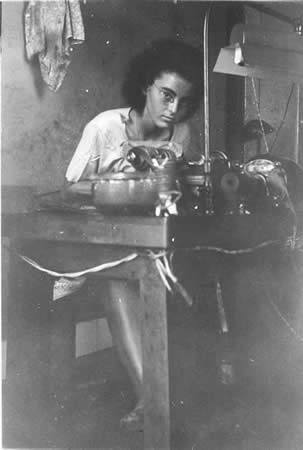
Marion Finkels Kreith, Havana, Cuba, 1943
CUBAN ARTIST AND ART HISTORIAN TO VISIT BOULDER
Renowned Cuban artist, Luis Eliades Rodríguez from Baracoa, Cuba, and art historian Jorge Nuñez from Guantánamo will be guests of BOCUSCO from April 7-11, 2013.
Artist Luis Eliades Rodriguez and art historian Jorge Nuñez will present “The Art and Culture of Eastern Cuba” on Monday, April 8 at 7:30 p.m. at Frasier Manor, 350 Ponca Place, 4th Floor Assembly Room. The presentation is free and open to the public. A reception with light refreshments will follow in the Sky Lounge.
BOCUSCO will also hold a members-only reception with Eliades and Nuñez on Wednesday, April 10. For more information on becoming a BOCUSCO member please go the membership information at the bottom of this page.
Jorge Nuñez received his degree in art history from the University of Havana and has written extensively on topics ranging from the Francophone influence in Cuban culture to current cinema in Cuba. He is currently Professor of Cuban Culture at the University of Guantánamo in Guantánamo City, Cuba.
Luis Eliades, of Baracoa, Cuba is especially known for his depictions of Afro Cuban themes and meticulously detailed pen and ink drawings. A member of the National League of Artists and Writers of Cuba, his paintings can be found at the UNICEF Institute of Studies of Cuban Revolution in New York, and in private collections around the globe.
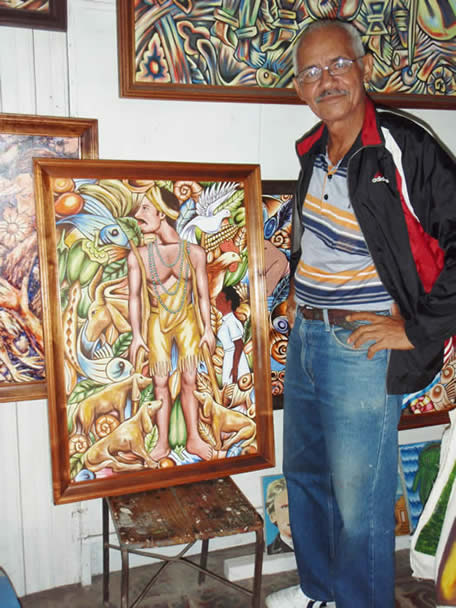
Luis Eliades Rodríguez with Babalú Aye/San Lazaro
For more about Eliades' art please visit Luis Eliades Rodríguez.
2012
READ ABOUT OUR JANUARY 2012 DELEGATION:
CUBA IS CHANGING
By Spense Havlick 02/12/2012 Boulder Daily Camera 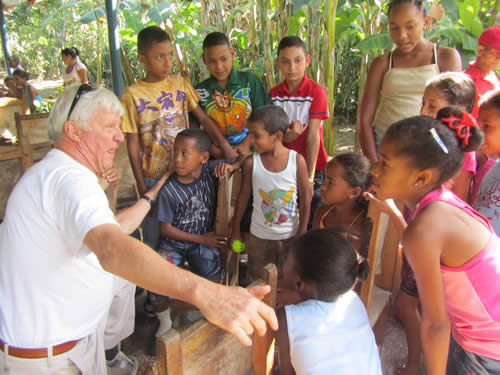
Boulder resident Biff Bilstein chats with children in Yateras
Much has changed in Cuba since the Boulder-Cuba sister city organization visited Guantanamo Province in 2010. January of this year marked the tenth anniversary of the establishment of a sister city relationship with the municipality of Yateras in the mountainous eastern tip of Cuba. With our own official U.S. Treasury Department license the Boulder people to people organization flew (a 60-minute flight) from Miami to Santiago de Cuba with gifts of humanitarian supplies, baseball equipment, artwork from a Boulder elementary school, and books featuring Cuban artists.
Eighteen people from the Boulder area spent time in four major areas over the 12-day visit. The cities included Guantanamo City seat of the provincial capital for Yateras, Baracoa where Columbus landed in 1492, Santiago de Cuba renowned as an early capital famous for its extensive cemetery where most revolutionary heroes are resting including Jose Marti, and of course Havana with her 2.5 million residents.
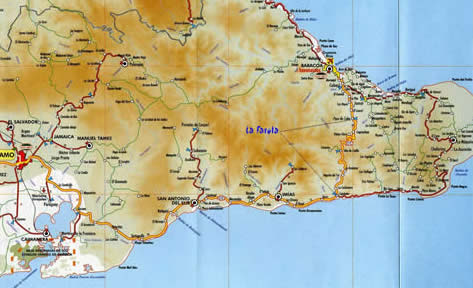
Eastern Cuba
Changes we observed on our recent trip included an elevated level of genuine friendliness toward us as Americans. Our friends in the Cuban Friendship Institute office who have served as hosts in years past welcomed us with a warmth that was almost like family. In previous visits to Yateras and Guantanamo the greetings were cordial but there may have been some uncertainty about the reason for our visit. Of course when you see the same mayor, the same lead doctor at the hospital, the same vivacious librarian (in Palenque) the same musicians at the Casa de Changui, and the same painters and sculptors in their tiny studios there is bound to be a unusual bridge of friendship built despite the disagreements of the two national governments.
There were many more privately owned restaurants in Baracoa and Guantanamo City.
Another pleasant surprise was a change in the expanded menu in the restaurants. Instead of just rice and beans (with a potential chicken morsel) today you find shrimp, fish, lamb, pork, beef, the obligatory pollo and ample vegetables such as tomatoes, green beans, carrots, cucumber, and fresh lettuce. Ice cream was very abundant with chocolate and coconut ice cream ranking as our favorites.
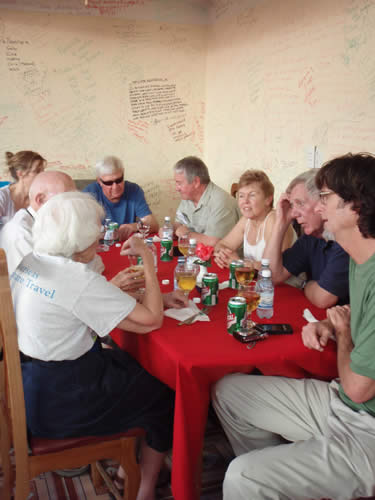
The group enjoys lunch at a private restaurant in Guantanamo.
In terms of changes in transportation the camel-like blue buses of Havana have been moved out to rural areas and replaced by more modern metroliner buses supplemented by rebuilt 1953 and 1954 Chevrolets, Buicks and even Cadillacs serving as taxis in Havana and Santiago. The Chinese government has given Cuba an entire passenger train set that runs between Havana and Santiago. But horse-drawn taxis and pedi cabs are the major transportation modes, along with bicycles in all of eastern Cuba.
Housing continues to be the No. 1 chronic problem throughout all of Cuba. No matter how dilapidated most of the housing was every housing unit had a rice cooker, running water, electricity, and a color TV. Last week the Raul Castro regime announced a grant to add home additions for families who qualify according to criteria of sub-standard housing, large family size and difficult proximity to close family relatives. Yet for tourists new or refurbished hotels were more common and many more private bed and breakfast lodgings (casas particulares) were available than just two years ago. We did encounter in some hotels tepid water, in some cases no water and in one major hotel, the Hotel Casa Granda in central Santiago the only elevator was out of order which made carrying luggage up four levels a struggle. In the rural areas of eastern Cuba we felt very safe day or night not only because there were so few automobiles but also because crime rates are very, very low. Cubans are not permitted to have firearms.
Highlights for our group were the Stone Zoo near Yateras; seeing the conversion of a toxic city dump into an urban garden and composting center in Guantanamo City, exploring the rainforest and manatee lagoons of Humbolt National Park (a UNESCO World Heritage site), an Afrocuban dance troop performance, meeting master artists and historians in Baracoa, and strolling through old Havana.
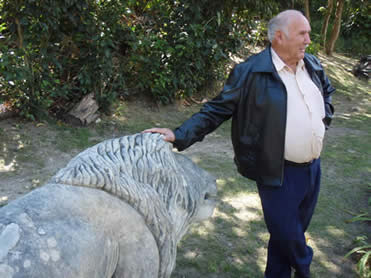
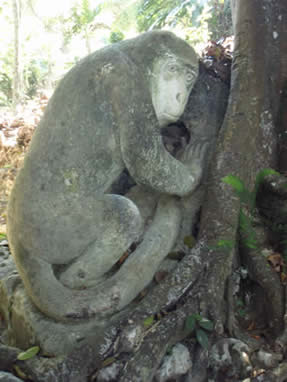
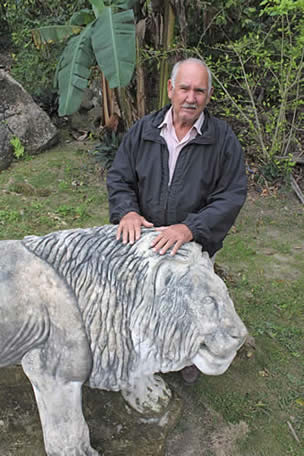
Sculptor Angel Iñigo Blanco at Yateras' Stone Zoo.
The best summaries from our Boulder-Cuba sister city trip are quotes from first-time Cuba visitors such as "They have been a fun people to get to know and come to understand." " It exceeded my expectations at every turn, meeting our sister city children was a heart opener." "The most musical place I have ever been." "The rare opportunity to interact with Cuban people, to share our commonality and friendship, I will never forget this trip."
The next sister city trip to Cuba will be May/ June and it will have an educational focus. Two experienced leaders will be accepting applications next month. Details are available at bouldercuba.org
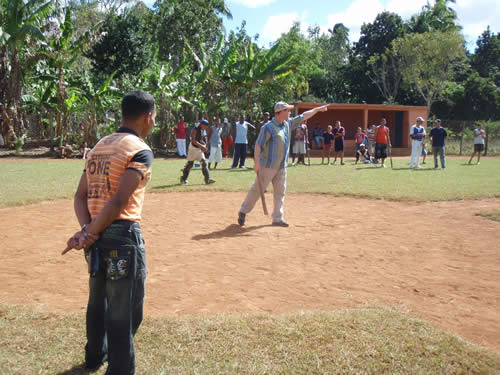
John Tayer's turn at bat.
Spense Havlick is a founding member of the Boulder-Cuba Sister City Organization and is a member of the Camera's editorial advisory board. He and Kate Hennessey, the president of BOCUSCO, were trip leaders on this recent journey to Cuba.
2011
Cuba Day
Saturday, July 23rd, noon-5:00
East Boulder Rec Center
5660 Sioux Drive
Boulder, CO 80303
$7 admission for all ages
Tickets will be available at the door
A feast for the senses! The Boulder Cuba Sister City Organization, in cooperation with the Boulder Senior Center, is hosting Cuba Day to celebrate our nearest Caribbean neighbor.
- Hear Harlan Abrahams, attorney and co author of the upcoming book, "Raul Castro and the New Cuba: a Closeup View of Change"
- Spense Havlick will talk about the origin of the Cuba sister city program
- Kate Hennessey will present a slideshow about preservation and renewal in Old Havana
- Enjoy a slideshow of eastern Cuba.
- Enjoy photographs, paintings, sculptures and music
- Learn a little Cuban dance
- See the film Salud about Cuban health outreach
Yank Tanks about Cubans keeping old American cars going
The Kingdom of the Bee Hummingbird about Humboldt National Park - See environmental education books for Cuban children, and learn about our sister city relationship with Yateras in eastern Cuba
- Enjoy some authentic tapas (little plates) of rice and beans, vegetarian empanadas, fruit, and coconut cookies prepared by Spice of Life and donated by Boulder Municipal Action for Immigrant Integration
- Buy original art from Cuba at the silent auction
Public meeting Tuesday, May 10, 2011
Reynolds branch library, 3595 Table Mesa Drive. 7:00 pm
Join us for a program about our sister municipality of Yateras, Guantánamo, Cuba, and learn about the Boulder-Cuba Sister City Organization. We will be electing officers and making plans for the upcoming year--GET INVOLVED!
Meet special guest, Mark Rucker, coauthor of Smoke.The Romance and Lore of Cuban Baseball. Books will be available for purchase, with proceeds to benefit Boulder-Cuba Sister City projects.
2010 Annual Report
Highlights of the year 2010 include:
January several members participated in a Project CURE delegation, taking medical supplies to eastern Cuba and our sister municipality of Yateras.
April 6 public meeting, election of officers and board of directors. Program, “Eastern Cuba 2010” presented by BOCUSCO members.
May presentation on historic preservation in Havana for the Boulder Historical Society
August 31, public presentation on Cuban energy revolution by visiting Cuban energy education specialist, Mario Alberto Arrastía Avila.
Completion of children’s book: Los Secretos del Parque about Alejandro de
Humboldt National Park in eastern Cuba, in conjunction with the St. Augustine
Friendship Association.
Completion of first draft of Alerta Permanente, a children’s book on oral health
care.
Working on plans for “Cuba Day,” July 23, 2011, with Boulder Senior Services.
-
Sister City members participate in Project CURE delegation to Eastern Cuba
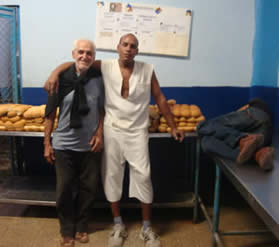
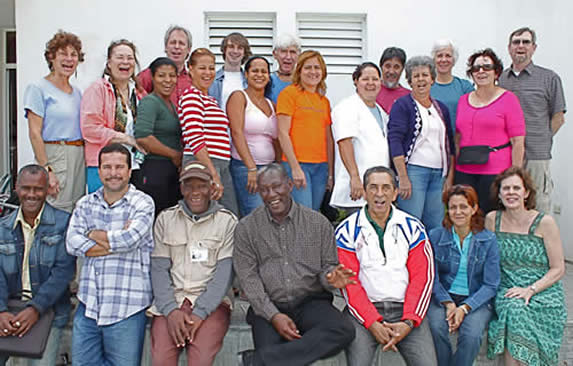
The report below is an edited version of a story by Tom Duncan and Spense Havlick that ran in the Boulder Daily Camera Jan. 31, 2010. All images Copyright Boulder-Cuba Sister City Organization.
The large suitcases loaded with medical and other supplies were so heavy it was a struggle to lift them. But this didn’t seem to dampen the enthusiasm of the members of the Boulder-Cuba Sister City Organization that on January 7, 2010 were heading for Cuba. We traveled under a U.S. humanitarian license issued to Project CURE, a Denver based NGO that we have worked with since 2006 to send shipments of medical equipment and supplies to our sister municipality of Yateras.
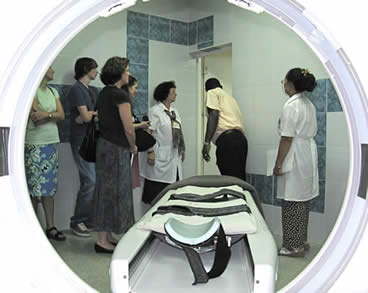
Project CURE has US government licenses to ship medical equipment and supplies to Cuba and for travel to Cuba to assess medical needs and evaluate previously provided donations. During the trip, the delegation visited hospitals and health centers in Yateras, Guantanamo City, and Baracoa to discuss current medical needs, the value of previously provided medical supplies and equipment, and related logistics.
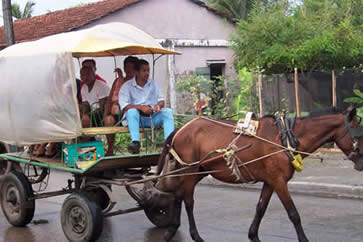
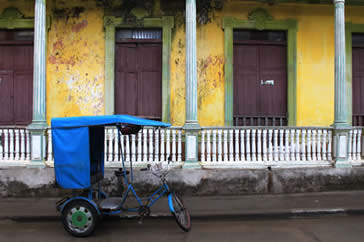
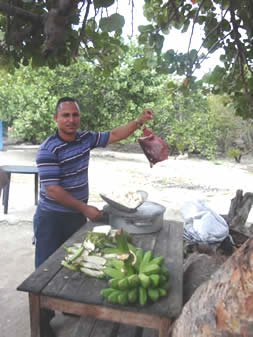
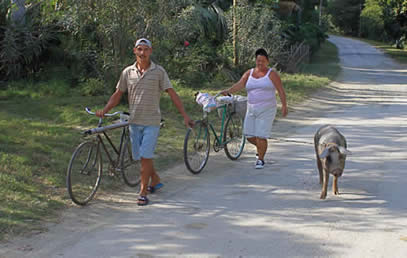
Our ultimate destination was Yateras, located in rural Guantanamo Province, about 600 miles east of Havana. An endless variety of social and landscape patterns best describes eastern Cuba in 2010, fifty years after the revolution and the ascent of Fidel Castro. Hundreds of people of all ages seemed to be “milling around” both on city streets and in the countryside along the highways. The main means of transportation is the horse drawn taxi cart and the bicycle taxi. In the country, ox-drawn carts were common. We did see a few Fords, Chevys, and Buicks from the 1950’s (U.S. car imports ended after the 1959 revolution).
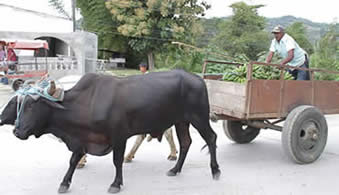
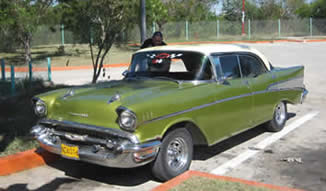
This eastern part of Cuba is home to sugarcane and cactus, rolling ranchlands, and tropical rainforests punctuated with fields of coffee, bananas, cacao, citrus, guava, and coconut. The coastline is a collage of coral, volcanic rock caves, mangroves, sea grape, and beaches totally absent of tourists. Particularly interesting were the cacti plants growing just feet from the rugged beaches.
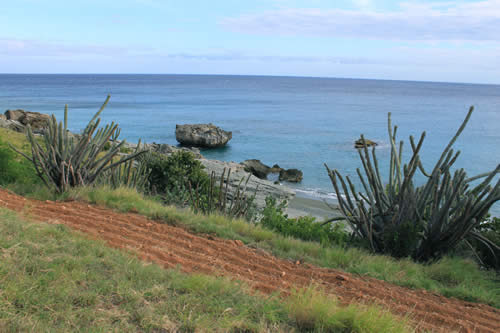
Upon our arrival in Guantanamo City, we were welcomed at the regional provincial guest house of ICAP (Cuban Institute for Friendship with Peoples), a non-governmental entity, dedicated to promote cultural exchange. Several members of this NGO were with us during our official visits to clinics, home doctor facilities, schools, several music venues called Houses of Changui, as well as the famous Yateras Stone Zoo. This “Zoo” is located about 15 km north of Guantanamo City and features over 400 life-sized animals and humans carved out of limestone by Angel Iñigo Blanco and his son. Señor Blanco made no drawings before hand and carved the stone images in place on the side of a mountain. (For more information go to www.zoologicodepiedra.com).
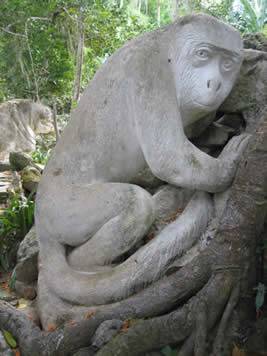
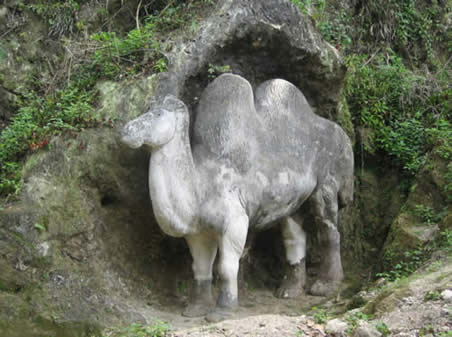
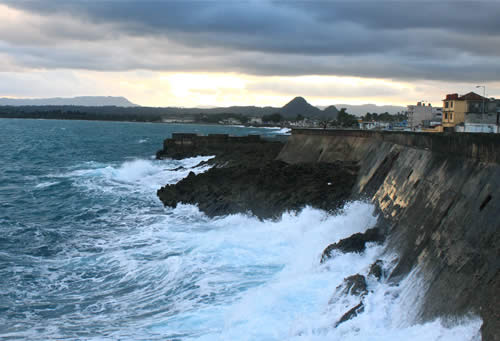
Our last two days were spent in Baracoa, Cuba’s oldest city (1511), a coastal art town where we arrived shortly before the earthquake hit Haiti. Within the next hour, the military declared a tsunami emergency and told people to “move to higher ground.” Our bus was soon trapped in a “people” jam. Fortunately, no tsunami occurred and everything soon returned to normal.
During our visit we met dozens of doctors and nurses and were shown parts of three hospitals plus one under construction. Doctors proudly told about their health care system, especially citing Cuba’s infant mortality rate of 4.8 per 1000 (the U.S. rate is 6.3). To become a doctor in Cuba requires six years of study beyond high school (five to become a nurse). All the doctors and nurses we saw were middle age or younger.
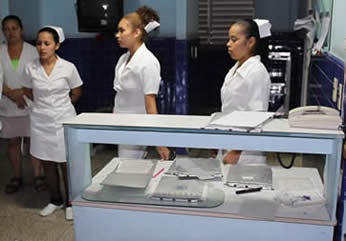
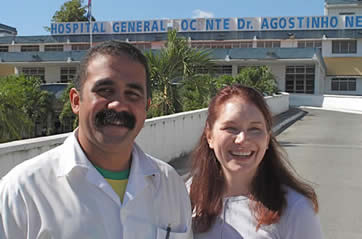
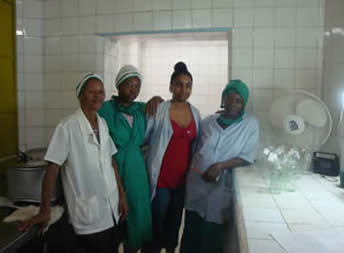
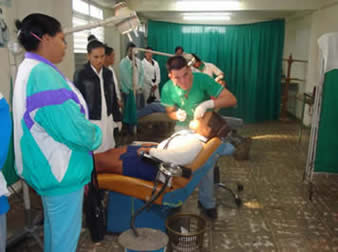
We saw no overcrowding in the hospitals and found patient-care rooms clean though often in need of paint and monitoring equipment. Hospital beds were simple metal frames (no moving parts) with thin, well-worn mattresses. Nearly all record keeping was by pencil and paper – few computers.
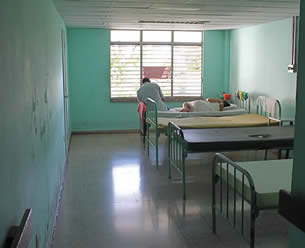
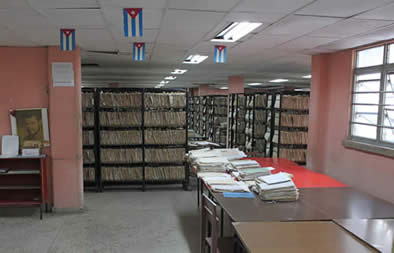
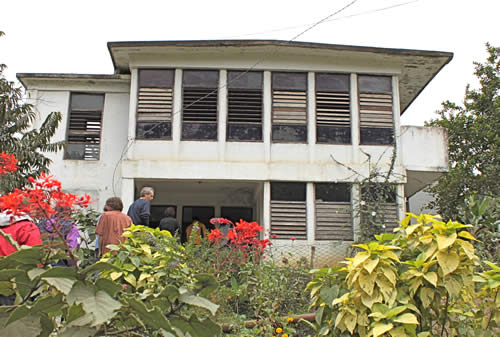
In the rural areas are “doctor houses.” The one we visited was two stories, with two doctors and a nurse living upstairs and a clinic on the first floor. Though clean, it had very few medical supplies. One of the major responsibilities of the country-house doctors and nurses is to make house calls following up patient visits.
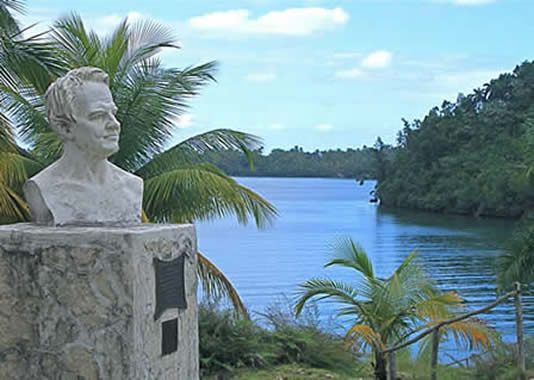
Another exceptional place in eastern Cuba is Humbolt National Park, one of the most biologically diverse ecosystems in the world with its striking mountain scenery and cloud forests. Although we visited the park’s main headquarters, our planned trip into the park suddenly became “unavailable”. The sometimes mystifying Cuban bureaucracy also prevented a visit to a primary school. Overall, however, we had considerable freedom of movement. We strolled among the milling crowds, wandered into artist studios, restaurants, and the few retail stores at will.
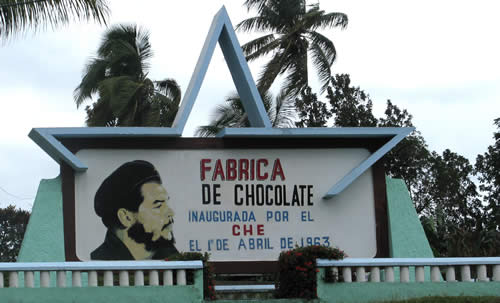
In place of the ubiquitous advertising outdoor boards and signs in the U.S., everywhere we traveled we saw, both outdoors and indoors (including hospitals and schools), political slogans, pictures of war heroes, and most pervasive of all, pictures of Che Guevara. Surprisingly, there were few pictures of Fidel or Raul Castro.
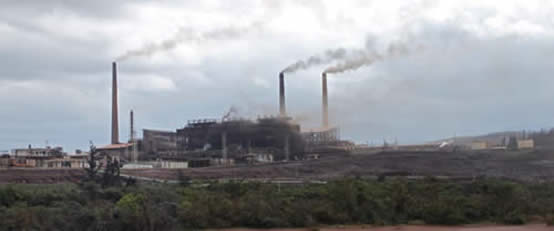
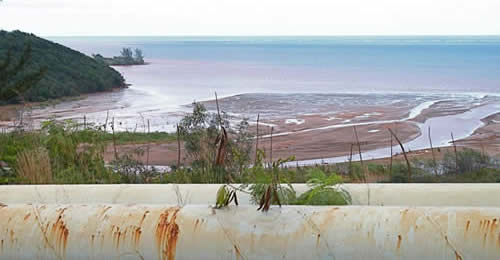
Cuba is one of the largest producers of nickel. On the northeastern coast the Moa Nickel open pit mine and processing facilities stretches for over a mile. Run off from the mining and processing has created a red stain that is in sharp contrast to the nearby Humbolt Park and its mission.
Surprising to many of us was seeing condoms listed on the menu boards of refreshment stands and available in restaurants. This is part of Cuba’s fight against AIDS that has resulted in the lowest percentage affected in the Western Hemisphere.
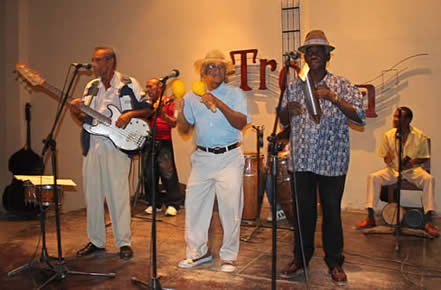
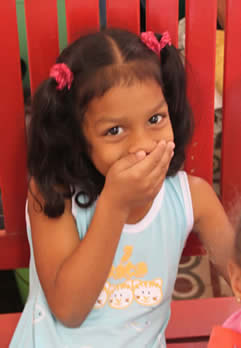
We found the Cuban people friendly with a love for music and dancing. Nevertheless, austerity and poverty prevail in eastern Cuba. If and when U.S.-Cuban relations improve and the embargo is lifted, it is our belief Cuba will become a desired vacation destination. The people, landscapes, coastlines and colorful coastal towns will be well worth the trip.
2009 Events and Activities
February. Romance of Rum. Rum tasting fundraiser.
2008 Events and Activities
March. Sponsored shipment of three containers of medical equipment and
supplies to Guantánamo Province, the result of planning and fundraising
since 2006.
April. Held public meeting featuring Dr. Peter Bourne, former Assistant
Secretary General of the United Nations, aide to President Carter, and
current Chairman of Medical Education in Cooperation with Cuba
(MEDICC). Dr. Bourne spoke about medicine in Cuba and many other
aspects of Cuban affairs. He also served on several panels at the
Conference on World Affairs.
April. We participated in the Sister Cities Alliance program “Sister Cities That Have Changed My Life”, a concurrent event at the Conference on World Affairs.
May. Two of our members travelled as part of a delegation to eastern Cuba with Project CURE to evaluate the medical equipment’s arrival, condition, and use.
June. The third of our endangered species coloring books was distributed to Cuban schools.
Summer and fall. We delivered plant materials, helped plant, and provided all fall maintenance for the Sister City Alliance Herb Garden. A web site for the garden is under development.
November. Held public meeting with a video presentation of the medical evaluation trip to Cuba.
December. Helped sponsor a container of hurricane relief supplies for Guantánamo Province.2007 Events and Activities
March. Shipment of humanitarian supplies to Cuba.
April. Presentation of film “¡Salud!” about the Cuban health system by Dr. Peter Bourne, followed by discussion. University of Colorado during Conference On World Affairs week.
May. Sister City Plaza dedication, honoring Bolulder’s six sister cities.
June. Distribution of Endangered Species Coloring Books in Cuba, commencing on World Environment Day.
June. South Boulder (SOBO) Summer Festival. Table Mesa Shopping Center. Sponsored by Southern Sun. Proceeds benefit BOCUSCO and BCAP.
August. Shipment of humanitarian supplies to Cuba.
October. Bioneers in Colorado. University of Colorado campus. BOCUSCO information table.
November. 2007 Cuban Connection FUNdraiser, featuring Chuchito Valdez. St. Julien Hotel, Boulder.
December. Packing of shipping container of medical equipment for Cuban hospitals.
Past Events 2006
March 14. Public Meeting. Election of officers.
April 12. Conference on World Affairs. University of Colorado. Panel presentation: "Sister Cities That Have Changed My Life."
May 1. Public Meeting. Boulder Community Hospital. "Assessment of Health Needs in Guantánamo Province." Powerpoint presentation by Douglas Jackson, CEO Project C.U.R.E.
May 12. Film. "The Power of Community, How Cuba Survived Peak Oil" Boulder Theater.
May 21. Benefit dinner. Ají Latin American Restaurant. Boulder.
June 3. South Boulder (SOBO) Summer Festival. Table Mesa Shopping Plaza. Sponsored by Southern Sun. Proceeds benefit Boulder-Cuba Sister City Organization and Boulder County AIDS Project.
August 28. Groundbreaking Ceremony for the Municipal Plaza honoring Boulder's six sister cities. Boulder Municipal Building, Broadway and Canyon.
September 13. Public Meeting. Speaker: Barry Krzywicki, "Terracotta 2005: Ceramics in Cuba." George Reynolds branch library.
October 20-22. Bioneers in Colorado. CU campus. BOCUSCO information table.
November 4. 2006 Cuban Connection FUNdraiser. St. Julien Hotel. Boulder.
November 15. Public Meeting. Speaker: Joel Edelstein, "The Cuban Revolution: A Preliminary Evaluation."