Boulder-Cuba Sister City Organization : bouldercuba.org
|
||
Boulder-Cuba Sister City OrganizationWhat's New:
Tuesday, August 31, 2010 7:00 pmBoulder Creek Room
1001 Arapahoe Avenue
During 2006 - 2007 Cuba saved close to one million tons of imported oil through these measures, and reduced their CO2 emissions by 5 million tons. FREE AND OPEN TO THE PUBLIC Co sponsored by Solar Energy International www.solarenergy.org For more information on Mario Arrastía Avila, click here: biography.
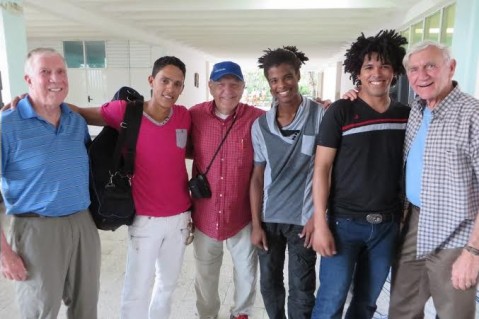
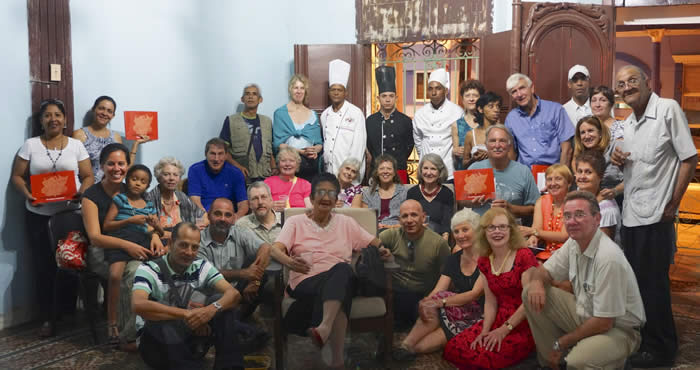
The report below is an edited version of a story by Tom Duncan and Spense Havlick that ran in the Boulder Daily Camera Jan. 31, 2010. All images Copyright Boulder-Cuba Sister City Organization. The large suitcases loaded with medical and other supplies were so heavy it was a struggle to lift them. But this didn’t seem to dampen the enthusiasm of the members of the Boulder-Cuba Sister City Organization that on January 7, 2010 were heading for Cuba. We traveled under a U.S. humanitarian license issued to Project CURE, a Denver based NGO that we have worked with since 2006 to send shipments of medical equipment and supplies to our sister municipality of Yateras. Project CURE has US government licenses to ship medical equipment and supplies to Cuba and for travel to Cuba to assess medical needs and evaluate previously provided donations. During the trip, the delegation visited hospitals and health centers in Yateras, Guantanamo City, and Baracoa to discuss current medical needs, the value of previously provided medical supplies and equipment, and related logistics. Our ultimate destination was Yateras, located in rural Guantanamo Province, about 600 miles east of Havana. An endless variety of social and landscape patterns best describes eastern Cuba in 2010, fifty years after the revolution and the ascent of Fidel Castro. Hundreds of people of all ages seemed to be “milling around” both on city streets and in the countryside along the highways. The main means of transportation is the horse drawn taxi cart and the bicycle taxi. In the country, ox-drawn carts were common. We did see a few Fords, Chevys, and Buicks from the 1950’s (U.S. car imports ended after the 1959 revolution).
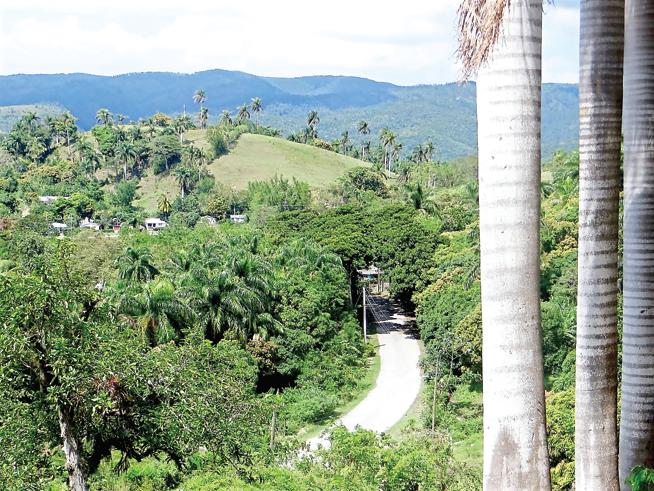
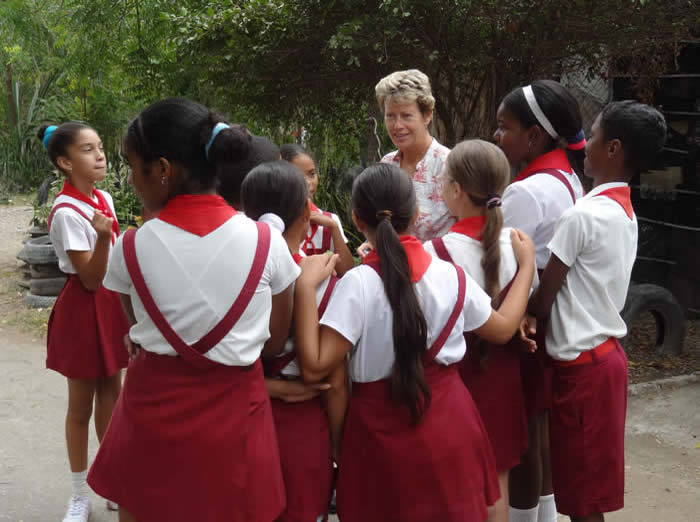
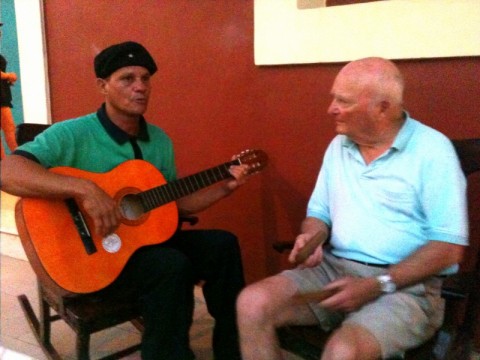
This eastern part of Cuba is home to sugarcane and cactus, rolling ranchlands, and tropical rainforests punctuated with fields of coffee, bananas, cacao, citrus, guava, and coconut. The coastline is a collage of coral, volcanic rock caves, mangroves, sea grape, and beaches totally absent of tourists. Particularly interesting were the cacti plants growing just feet from the rugged beaches. Upon our arrival in Guantanamo City, we were welcomed at the regional provincial guest house of ICAP (Cuban Institute for Friendship with Peoples), a non-governmental entity, dedicated to promote cultural exchange. Several members of this NGO were with us during our official visits to clinics, home doctor facilities, schools, several music venues called Houses of Changui, as well as the famous Yateras Stone Zoo. This “Zoo” is located about 15 km north of Guantanamo City and features over 400 life-sized animals and humans carved out of limestone by Angel Iñigo Blanco and his son. Señor Blanco made no drawings before hand and carved the stone images in place on the side of a mountain. (For more information go to www.zoologicodepiedra.com).
Our last two days were spent in Baracoa, Cuba’s oldest city (1511), a coastal art town where we arrived shortly before the earthquake hit Haiti. Within the next hour, the military declared a tsunami emergency and told people to “move to higher ground.” Our bus was soon trapped in a “people” jam. Fortunately, no tsunami occurred and everything soon returned to normal. During our visit we met dozens of doctors and nurses and were shown parts of three hospitals plus one under construction. Doctors proudly told about their health care system, especially citing Cuba’s infant mortality rate of 4.8 per 1000 (the U.S. rate is 6.3). To become a doctor in Cuba requires six years of study beyond high school (five to become a nurse). All the doctors and nurses we saw were middle age or younger.
We saw no overcrowding in the hospitals and found patient-care rooms clean though often in need of paint and monitoring equipment. Hospital beds were simple metal frames (no moving parts) with thin, well-worn mattresses. Nearly all record keeping was by pencil and paper – few computers.
In the rural areas are “doctor houses.” The one we visited was two stories, with two doctors and a nurse living upstairs and a clinic on the first floor. Though clean, it had very few medical supplies. One of the major responsibilities of the country-house doctors and nurses is to make house calls following up patient visits. Another exceptional place in eastern Cuba is Humbolt National Park, one of the most biologically diverse ecosystems in the world with its striking mountain scenery and cloud forests. Although we visited the park’s main headquarters, our planned trip into the park suddenly became “unavailable”. The sometimes mystifying Cuban bureaucracy also prevented a visit to a primary school. Overall, however, we had considerable freedom of movement. We strolled among the milling crowds, wandered into artist studios, restaurants, and the few retail stores at will. In place of the ubiquitous advertising outdoor boards and signs in the U.S., everywhere we traveled we saw, both outdoors and indoors (including hospitals and schools), political slogans, pictures of war heroes, and most pervasive of all, pictures of Che Guevara. Surprisingly, there were few pictures of Fidel or Raul Castro.
Cuba is one of the largest producers of nickel. On the northeastern coast the Moa Nickel open pit mine and processing facilities stretches for over a mile. Run off from the mining and processing has created a red stain that is in sharp contrast to the nearby Humbolt Park and its mission.
Surprising to many of us was seeing condoms listed on the menu boards of refreshment stands and available in restaurants. This is part of Cuba’s fight against AIDS that has resulted in the lowest percentage affected in the Western Hemisphere. We found the Cuban people friendly with a love for music and dancing. Nevertheless, austerity and poverty prevail in eastern Cuba. If and when U.S.-Cuban relations improve and the embargo is lifted, it is our belief Cuba will become a desired vacation destination. The people, landscapes, coastlines and colorful coastal towns will be well worth the trip.
Shipping medical equipment and supplies to Eastern CubaSince 2006 the Boulder-Cuba Sister City Organization has been raising funds to sponsor the shipment of medical equipment and supplies to Guantánamo province in conjunction with Denver-based Project C.U.R.E. www.projectcure.org. We are pleased to announce that the first FIVE 40’ cargo containers have arrived at their destinations: a container of hurricane relief supplies following the devastion of Hurricane Ike; as well as containers to the main hospital in Guantánamo which serves the entire province including Yateras; the Guantánamo Pediatric Hospital; the main hospital in Baracoa, and the hospital in Palenque, Yateras. We would like to thank all of the donors, sponsors and volunteers who have contributed to the success of this project. Thanks to everyone’s efforts and generosity, we have been able to provide one of the poorest provinces of Cuba with such supplies as X-ray machines, anesthesia machines, mamography units, operating tables, stethoscopes, microscopes, laboratory supplies, defibrillators, and much more. Please visit our HEALTH committee page to learn more about health care in Yateras and our health related projects. THANK YOU!!
About the Boulder-Cuba Sister City OrganizationThe Boulder Cuba Sister City Organization (BOCUSCO), is a 501(c)3 non-profit, non-political, all-volunteer citizen network which exists to create lasting partnerships to promote cultural sharing, understanding and exchange between citizens of Boulder, Colorado and the municipality of Yateras, Guantánamo, Cuba. Yateras, located in the mountainous easternmost Cuban province of Guantánamo, became Boulder’s sixth sister city in 2002. Although many of our exchanges and activities involve the community of Yateras, we are also involved in projects, such as health and environmental projects, in other areas of Guantánamo Province including Guantánamo City. Boulder has other sister cities in Japan, Mexico, Nicaragua, Tibet, Kenya and Tajikistan. BOCUSCO organizes activities, with support from the Boulder community, through its five committees: Arts and Education, Environment and Sustainability, Health, Music and Dance, Sports. BOCUSCO officers for 2010 are: Chan Mortimer, Kate Hennessey co-Presidents; Tom Duncan, Vice President; Janice Zelazo, Secretary; Pat Comer, Treasurer.
Current ProjectsSince 2005 BOCUSCO has been working in collaboration with U.S. government-licensed organizations to ship mountain bikes, wheelchairs, medical equipment and supplies, school supplies, athletic equipment and footwear to Yateras.
In addition to those ongoing shipments, we have prioritized projects for 2009-10 for which we are currently raising funds. We will continue to sponsor the delivery of medical supplies and equipment to Guantánamo province in conjunction with Denver's Project C.U.R.E. www.projectcure.org; help Yateras to renovate their community library by providing donations of supplies and Spanish-language books, and work with environmental organizations on educational campaigns to protect endangered and endemic species in eastern Cuba. BOCUSCO is also dedicated to bringing more awareness of Cuba to the Boulder community through speakers, music, film, food and dance. (updated October 2009) DonateTo make a tax-deductible donation with Paypal, please click the button below. THANK YOU FOR VISITING OUR WEBSITE
|